🔥 EFFEUNO BLACK FRIDAY – SAVE UP TO 15% + FREE PEEL ON SELECTED OVENS – SHOP NOW →

How many Pizza Peels do you actually need?

Different stages of the pizza-making process call for different tools.

A peel used to launch a delicate, freshly topped pizza is doing a very different job from the small peel used to turn a pizza inside a 450°C oven. And the peel used to retrieve a finished pizza doesn’t necessarily need the same characteristics as the one used for preparation.

Spend any time around a busy pizzeria and you’ll quickly notice something: they rarely use just one peel.

So, how many pizza peels do you actually need?

One pizza, five jobs: which peel does what?

Before deciding how many peels you need, it helps to understand the different jobs they can perform.

1. Prep & launch peel

Build, support and launch the pizza.

This is the peel used to support the dough while you stretch and top your pizza, then transfer it into the oven.

A good launch peel needs to be light, rigid and easy to manoeuvre, with a surface that allows the dough to slide cleanly into the oven.

For many home pizza makers, an all-purpose peel can perform this job perfectly well. But when you’re making pizza regularly, a dedicated launch peel can make the process considerably easier.
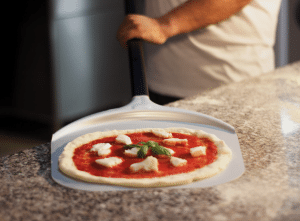
GIMetalNonPerforatedLaunchPeel

 2. Perforated launch peel

Launch the pizza while reducing excess flour going into the oven.

Perforated peels have become increasingly popular because the holes allow excess flour or semolina to fall

That’s particularly useful when cooking at very high temperatures, where loose flour can burn on the oven floor and affect the flavour of the pizza.

The perforations can also help steam escape when handling a cooked pizza, helping to preserve a crisp base.
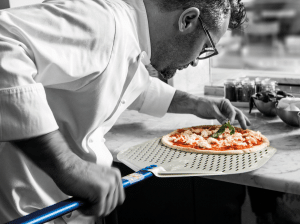
GIMetalPerforatedLaunchPeel

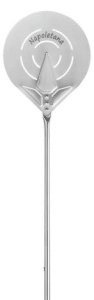
3. Turning peel

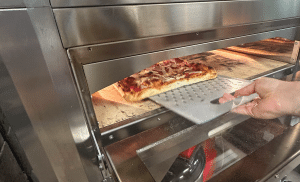
To get underneath part of the pizza and rotate it without taking the pizza out of the oven.

That’s particularly useful when cooking Neapolitan-style pizza at very high temperatures, where the pizza may only be in the oven for a minute or so.

Keeping the pizza on the hot cooking surface while turning it also helps maintain the heat of the bake.
4. Retrieval peel

Get the finished pizza safely out of the oven.

Once the pizza is cooked, you need to get it off the oven floor and onto a board or serving surface.

A thin, appropriately sized metal peel can slide underneath the pizza and lift it without damaging the crust.

For some pizza makers, the same peel used to launch the pizza can also be used for retrieval. For others, keeping the preparation peel separate from the hot retrieval tools makes the workflow easier.
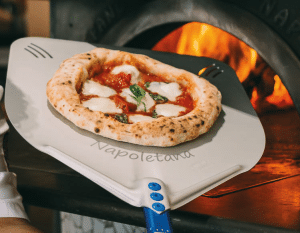
GI Metal Neapolitan Peel

 5. Serving peel

Transfer the finished pizza and serve it.

A serving peel is less about getting the pizza into the oven and more about what happens afterwards.

Depending on the setup, a wooden or presentation-style peel can double as a serving board, allowing the pizza to go directly from oven to table.

This can be particularly useful in restaurants where presentation is part of the experience. 
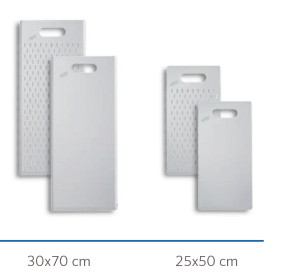
GI Metal Peels used to serve GI Metal Perforated Serving Peel

So, how many pizza peels do you actually need?

For someone making the occasional pizza at home, one good all-purpose peel may be all you need.

A conventional peel can prepare, launch and retrieve a pizza, and can usually manage basic turning too.

But once you start making pizza more frequently, having a second peel makes a noticeable difference.

The professional setup

In a busy pizzeria, the question becomes less about how many peels do I need? and more about workflow

When you’re producing pizza continuously, small improvements in speed, control and consistency can add up.

Different ovens, pizza styles, pizza sizes and production volumes can all influence the ideal peel setup.

A professional pizza maker might therefore have several different peels available, with each one selected for a particular task.

And that’s the important point:

A pizza peel isn’t just an accessory. It’s a piece of production equipment.

The right peel for the right job
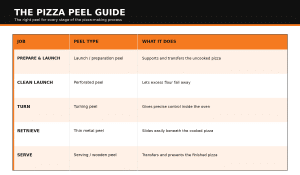
Pizza Peel Type Table


Of course, there can be overlap. A good all-purpose peel may be capable of performing several of these jobs.

But capable of doing a job isn’t necessarily the same as being the best tool for that job.

That’s why experienced pizza makers often end up with more than one peel.

The real question isn’t “How many peels do I need?”

It is....

What jobs am I asking my peel to perform?

If you’re stretching dough, launching pizza, turning pizza, retrieving pizza and serving pizza with the same tool, you’re asking one piece of equipment to do five different jobs.

For occasional pizza making, that’s perfectly reasonable.

For someone making dozens or hundreds of pizzas, separating those jobs can make the process faster, cleaner and more consistent.

The right number isn’t necessarily three, four or five.

It’s enough to give every stage of the pizza-making process the right tool.

 

UNESCO Recognition and what it means for pizza equipment

UNESCO's recent recognition carries a quiet gravity, but what does it mean for the pizza equipment or tools that transform humble dough into something iconic?

Even a simple slice can feel like a small ceremony. With UNESCO’s recent recognition of Italy’s culinary tradition as an intangible cultural treasure, that gravity has only grown. It’s a global nod to centuries of craft, community, regional pride in everything that shapes it. 

While UNESCO celebrates the people and practices behind Italian food, it also shines a light on something easy to overlook: the equipment shaped by generations of artisans. Ovens forged with regional know-how, mixers engineered to respect the dough’s living character, and tools built not just to work but to honour a tradition. 

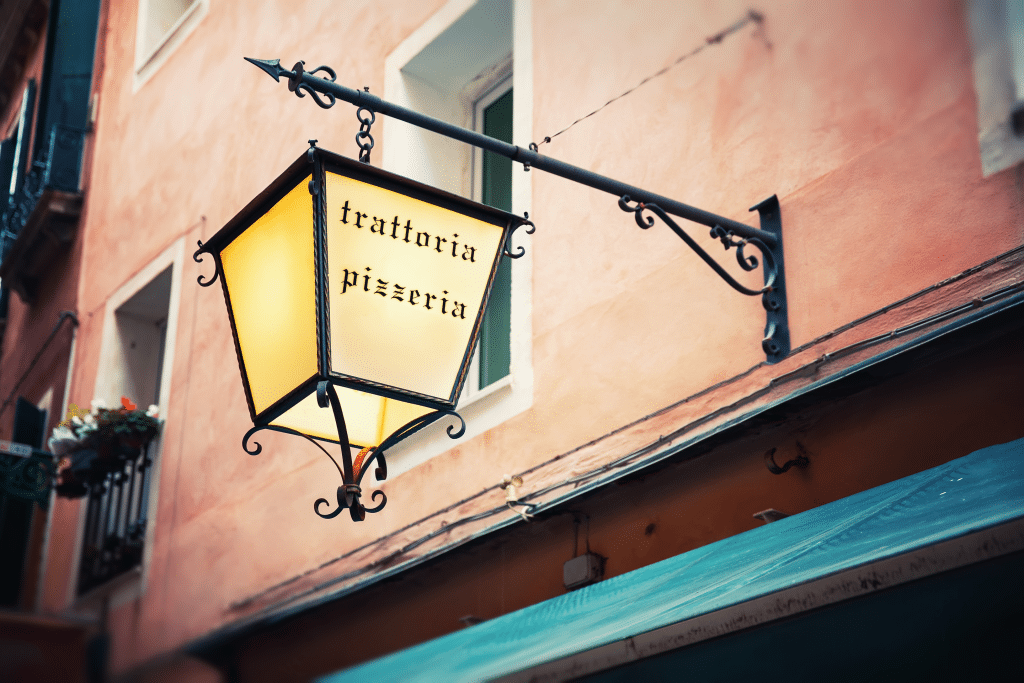
sign traditional Italian pizzeria   

Why equipment matters in a UNESCO moment  

Authentic pizza isn’t only about ingredients. It’s also about the machinery that prepares, shapes, and fires them into their final form.  

Italian manufacturers understand this deeply. Many of them don’t just build equipment. They safeguard methods. They preserve techniques. Their factories carry echoes of workshops where craftsmanship came before mass production, and today they continue to blend modern engineering with traditions that predate electricity.  

In light of UNESCO’s recognition, this craftsmanship feels newly significant. When you use Italian-made equipment, you’re not just investing in reliability. You’re aligning your kitchen with the very heritage that UNESCO has chosen to protect. 


Certification and trust: why Italian accreditation matters 

Names like Marana, IZZO, GI Metal and Vitella aren’t just respected brands; they are part of Italy’s culinary lineage.   

These brands hold accreditation from organisations such as the True Neapolitan Pizza Association (AVPN), which validates equipment capable of producing pizza that meets strict Neapolitan standards. These certifications aren’t rubber stamps. They are challenges. They require equipment that respects: 


 When a manufacturer meets those conditions, it signals something powerful: the equipment carries the DNA of the cuisine it serves. 


Made in Italy, in every sense of the phrase 


The beauty of Italian equipment isn’t just its geographic origin. It’s the philosophy behind it. Many of the manufacturers we work with continue to use methods that have been refined rather than replaced: 


These aren’t gestures to the past. They acknowledged that some things only work well because they were shaped slowly. 


What this means for pizzerias today 


For chefs and operators, UNESCO’s recognition isn’t only a cultural victory. It’s a business opportunity. Customers are increasingly curious about authenticity, story, and provenance. The equipment you choose becomes part of that narrative. At Pizza Equipment we source our brands with the same care; many are small artisan companies that use traditional methods or are larger companies with a culture or family inheritance behind them. 


Using accredited, Italian-made equipment allows you to say with full confidence: 


“Our process honours the same traditions UNESCO has celebrated.” 

You’re not just making pizza. You’re participating in a recognized heritage. 

A bridge between tradition and the modern kitchen 


In a world where food trends come and go with startling speed, Italy’s culinary tradition has endured because it is rooted in real craft. The right equipment doesn’t replace that craft; it supports it. It lets chefs replicate centuries-old methods with the consistency modern service demands. 


UNESCO’s recognition invites all of us to look again at Italian cuisine not just as something delicious, but as something profoundly cultural. And for those working in professional kitchens, it’s a reminder that authenticity starts long before the first ingredient is added. It begins with the tools built to honour a heritage.  


Ask us about the brands that we stock, we will be more than happy to share the history and craftsmanship behind them. 

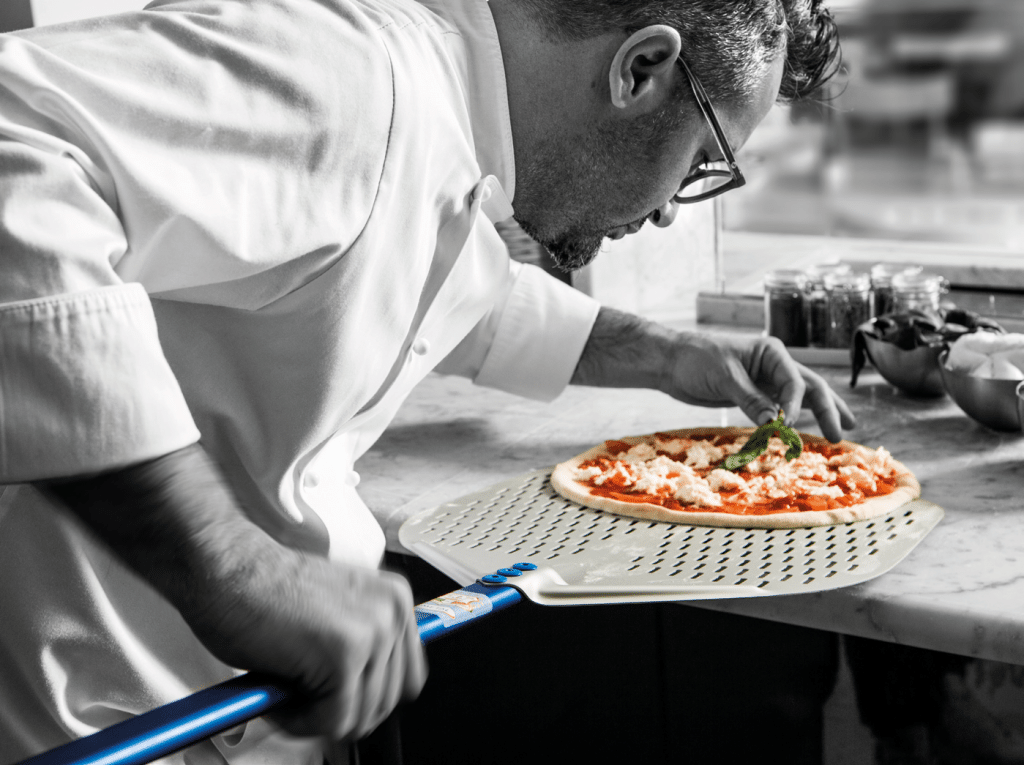
Chef using GIMetal peel


Made in Italy: Authentic Pizza Equipment

When it comes to pizza, authenticity goes far beyond the recipe. For those seeking true Italian quality, it’s worth looking behind the label to see where and how your equipment is made and used.

From the peel that turns the dough to the oven that brings it to life, the tools behind the craft are just as important as the pizzaiolo’s skill.

The Heart of Tradition 

Some of the world’s most respected oven or equipment makers, like Izzo Forni, Marana Forni, Vitella,  GiMetal  still operate in Italy today and have approval from the True Neapolitan Pizza Association (Associazione Verace Pizza Napoletana or AVPN).

AVPN Logo

Family Brands keeping pizza tradition alive

Many of the leading manufacturers were established in or remain family-run, like IGF, Zio Ciro and Linea Dori, producing equipment with a mix of craftsmanship and innovation while keeping traditional methods alive.   

The ovens and tools that these companies produce have been used in traditional pizzerias for many years and are recommended by top chefs. Choosing these brands means investing not only in performance but in heritage. At Pizza Equipment we keep tradition and authenticity at the centre of our sourcing policies too. We seek products that are endorsed by the industry bodies and/or used by the masters of the craft.   

Learning From the Masters 

Authenticity is also about knowledge. Schools like the Scuola Italiana Pizzaioli train chefs in Italy’s time-honored techniques. Not only is tradition at the centre of product sourcing, but we offer equipment demos, advice, courses and training led by an approved chef at our showroom. It’s the ideal opportunity for our clients to see equipment in action and how it is used in an authentic manner. 

Italian Pizza School

What to look for 

Look for the AVPN logo, the approved international brand "true Neapolitan pizza" certifies that the product is suitable for making true Neapolitan pizza, as it has passed the stringent checks required by the implementing regulation of the Register of Suppliers and the tests by the Federico II University of Naples.  

Scuola Italiana Pizzaioli is also an important part of the whole Italian food tradition, it was founded in Venice in 1988, their aim is to train future professionals in the world of pizza. Look out for their approval when you choose a course or training program, that way you can ensure that everything is delivered with a high level of professionalism and is true to the Italian culture. 


Why It Matters 

Pizza is more than food, it’s culture. By choosing equipment backed by the professionals and truly Made in Italy, you’re not just buying tools; you’re carrying forward generations of know-how and offering customers a genuine slice of Italian history. 

Because when the fire is real, the flavour follows. Â