🔥 EFFEUNO BLACK FRIDAY – SAVE UP TO 15% + FREE PEEL ON SELECTED OVENS – SHOP NOW →

How many Pizza Peels do you actually need?

Different stages of the pizza-making process call for different tools.

A peel used to launch a delicate, freshly topped pizza is doing a very different job from the small peel used to turn a pizza inside a 450°C oven. And the peel used to retrieve a finished pizza doesn’t necessarily need the same characteristics as the one used for preparation.

Spend any time around a busy pizzeria and you’ll quickly notice something: they rarely use just one peel.

So, how many pizza peels do you actually need?

One pizza, five jobs: which peel does what?

Before deciding how many peels you need, it helps to understand the different jobs they can perform.

1. Prep & launch peel

Build, support and launch the pizza.

This is the peel used to support the dough while you stretch and top your pizza, then transfer it into the oven.

A good launch peel needs to be light, rigid and easy to manoeuvre, with a surface that allows the dough to slide cleanly into the oven.

For many home pizza makers, an all-purpose peel can perform this job perfectly well. But when you’re making pizza regularly, a dedicated launch peel can make the process considerably easier.
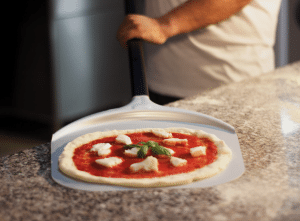
GIMetalNonPerforatedLaunchPeel

 2. Perforated launch peel

Launch the pizza while reducing excess flour going into the oven.

Perforated peels have become increasingly popular because the holes allow excess flour or semolina to fall

That’s particularly useful when cooking at very high temperatures, where loose flour can burn on the oven floor and affect the flavour of the pizza.

The perforations can also help steam escape when handling a cooked pizza, helping to preserve a crisp base.
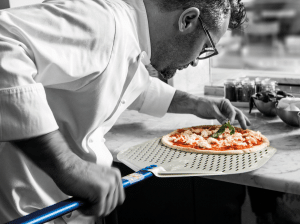
GIMetalPerforatedLaunchPeel

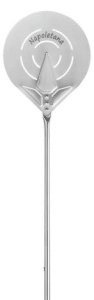
3. Turning peel

To get underneath part of the pizza and rotate it without taking the pizza out of the oven.

That’s particularly useful when cooking Neapolitan-style pizza at very high temperatures, where the pizza may only be in the oven for a minute or so.

Keeping the pizza on the hot cooking surface while turning it also helps maintain the heat of the bake.
4. Retrieval peel

Get the finished pizza safely out of the oven.

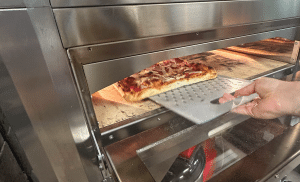
Once the pizza is cooked, you need to get it off the oven floor and onto a board or serving surface.

A thin, appropriately sized metal peel can slide underneath the pizza and lift it without damaging the crust.

For some pizza makers, the same peel used to launch the pizza can also be used for retrieval. For others, keeping the preparation peel separate from the hot retrieval tools makes the workflow easier.
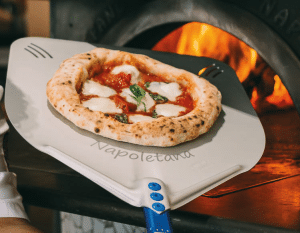
GI Metal Neapolitan Peel

 5. Serving peel

Transfer the finished pizza and serve it.

A serving peel is less about getting the pizza into the oven and more about what happens afterwards.

Depending on the setup, a wooden or presentation-style peel can double as a serving board, allowing the pizza to go directly from oven to table.

This can be particularly useful in restaurants where presentation is part of the experience. 
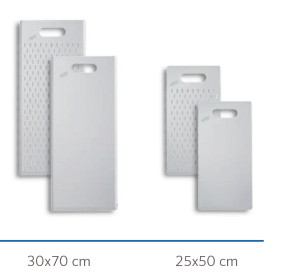
GI Metal Peels used to serve GI Metal Perforated Serving Peel

So, how many pizza peels do you actually need?

For someone making the occasional pizza at home, one good all-purpose peel may be all you need.

A conventional peel can prepare, launch and retrieve a pizza, and can usually manage basic turning too.

But once you start making pizza more frequently, having a second peel makes a noticeable difference.

The professional setup

In a busy pizzeria, the question becomes less about how many peels do I need? and more about workflow

When you’re producing pizza continuously, small improvements in speed, control and consistency can add up.

Different ovens, pizza styles, pizza sizes and production volumes can all influence the ideal peel setup.

A professional pizza maker might therefore have several different peels available, with each one selected for a particular task.

And that’s the important point:

A pizza peel isn’t just an accessory. It’s a piece of production equipment.

The right peel for the right job
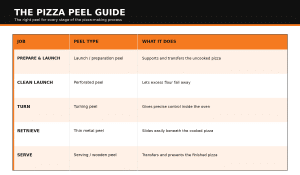
Pizza Peel Type Table


Of course, there can be overlap. A good all-purpose peel may be capable of performing several of these jobs.

But capable of doing a job isn’t necessarily the same as being the best tool for that job.

That’s why experienced pizza makers often end up with more than one peel.

The real question isn’t “How many peels do I need?”

It is....

What jobs am I asking my peel to perform?

If you’re stretching dough, launching pizza, turning pizza, retrieving pizza and serving pizza with the same tool, you’re asking one piece of equipment to do five different jobs.

For occasional pizza making, that’s perfectly reasonable.

For someone making dozens or hundreds of pizzas, separating those jobs can make the process faster, cleaner and more consistent.

The right number isn’t necessarily three, four or five.

It’s enough to give every stage of the pizza-making process the right tool.

 

Take stock of your pizza equipment, ready for European Pizza Show

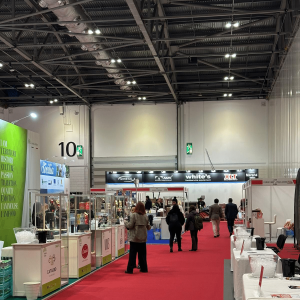
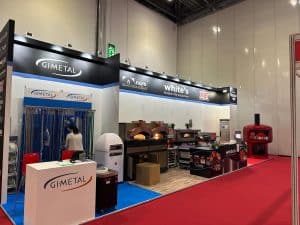
If you’re considering an equipment upgrade, we’ll be at The European Pizza Show at ExCeL London on 18 & 19 November, so it’s a great opportunity to come and have a chat with us in person.

MeetingAtEuropeanPizzaShow

September is a good time to take a look at your pizza kitchen before the busy months really get underway.

If there’s a piece of equipment that’s been frustrating you, a process that’s taking longer than it should, or something you’ve been meaning to upgrade, now is the time to start thinking about it.

You don’t necessarily need to replace everything. Sometimes a better-sized mixer, a few more pans, improved storage or a small change to your setup can make a surprisingly big difference when you’re busy.

That’s the kind of thing we like talking to our customers about, what you’re doing now, where the pinch points are and what might make life easier.

In the meantime, here are a few things worth looking at before the autumn rush arrives.

Is your oven large enough?

Your oven is at the heart of your pizza operation, so any bottleneck here is going to make itself known quickly.

If you’re regularly waiting for oven space, having to stagger orders or watching pizzas pile up during peak periods, it may be worth looking at whether your current capacity still matches your business.

And if you’ve grown since you bought your oven, don’t assume the answer is necessarily another oven. The right cooking capacity and a well-planned workflow can make a big difference. Take a look at it now and get ready to have a chat and see some demos on our stand.

European Pizza Show 2026

Is your mixer still the right size?

It’s easy to forget about the equipment doing the work behind the scenes.

If your dough production has increased, your mixer may now be working much harder than it was when you bought it. Perhaps you’re splitting batches or running it several times a day just to keep up.

It’s worth comparing your current dough production with the capacity you actually need.

A more suitable mixer can mean fewer batches, less handling and a smoother prep routine.

Have you got enough pans?

This is one of those things you tend to notice when you’re already in the middle of service.

If you’re regularly running short of pans, washing and reusing them quickly, or hanging onto older pans because you don’t quite have enough stock, it could be worth reviewing what you’ve got before the busy season.

You may not need a complete replacement. Adding a few more of the sizes you use most could be all that’s needed.

And if you’re introducing a new style of pizza, different pan sizes and formats can also give you more options for your menu.

Could better storage make life easier?

Equipment doesn’t just need to work well it needs to work well in your kitchen.

Take pan storage. If pans are stacked wherever there’s space, staff are constantly moving things around to find the right size, or your storage area is becoming a bottleneck, the problem might not be the pans themselves.

A suitable rack, shelving system or trolley can keep everything organised and make better use of the space you already have.

Sometimes it’s the simple changes that make the biggest difference.

What have you been making do with?

Every commercial kitchen has something.

The mixer that’s slightly too small. The prep area that’s always cramped. The pan rack that’s permanently full. The oven that copes perfectly well, until Friday night.

None of these necessarily needs replacing immediately. But if something regularly slows the team down, costs time or creates frustration, it’s worth putting it on your equipment wish list.

You might find there’s a straightforward solution.

Start planning now!

The autumn and winter months are a good opportunity to make sure your equipment is working for you rather than against you.

If you’re considering an upgrade but aren’t sure what would make the biggest difference, give us a call or come and talk to us at the European Pizza Show.

European Pizza Show Whites

We’ll be at ExCeL London on 18–19 November, with plenty of pizza equipment to look at and, more importantly, plenty of experience to share. Use this registration link to book your free place.

EuropeanPizzaShow logo2026

Bring your questions. Tell us what’s working, what’s not and what you’d like to improve. We’ll be happy to talk it through.

Roasting Vegetables in your Pizza Oven

Most people buy a pizza oven for one reason: pizza. But whether you’re working with a traditional wood-fired oven or a modern electric deck oven, some of the best things you can cook are actually vegetables.

Pizza ovens are built for high heat, fast cooking, and incredible flavour, which makes them perfect not only for pizza, but for vegetables too.

Whether you’re using a traditional wood-fired oven or a modern electric deck oven, roasting vegetables in a pizza oven delivers: deep caramelisation, light charring, concentrated sweetness, and texture that stays crisp rather than soft.

And it’s not just about serving vegetables as sides. Roasted vegetables can completely transform a pizza, adding smokiness, sweetness, texture, and colour that elevate even the simplest combinations.

From blistered peppers and charred onions to roasted cauliflower and courgettes, pizza ovens open up endless possibilities both on and off the pizza.


WHY PIZZA OVENS WORK SO WELL FOR VEGETABLES

The intense heat inside a pizza oven cooks vegetables quickly while drawing out moisture and concentrating flavour.

Instead of steaming or softening, vegetables roast rapidly, developing:

• Crisp edges

• Smoky notes

• Natural sweetness

• Better texture

• Rich caramelisation

This is especially important for pizza toppings. Pre-roasting vegetables before they go onto a pizza prevents excess moisture from soaking the dough and creates stronger, more balanced flavour.

WOOD-FIRED OVENS

Wood-fired ovens like those from Zio Ciro create a live-fire cooking environment where flame, smoke, and radiant heat all contribute to flavour.

Vegetables cooked in a wood-fired oven develop subtle smokiness and more irregular charring, which works beautifully for rustic pizzas and Mediterranean-style dishes.

Wood-fired ovens are ideal for:

Roasting vegetables in a wood fired oven

• Peppers

• Aubergines

• Onions

• Mushrooms

• Tomatoes

• Courgettes

Cooking directly near the flame creates blistered skins and smoky edges, while slower roasting deeper inside the oven softens vegetables without burning them.

Roasted peppers, onions, and mushrooms work particularly well as pizza toppings after being lightly charred in a wood-fired oven.

ELECTRIC DECK OVENS

Electric deck ovens like the IGF Blackline series offer precision, consistency, and excellent heat retention.

The stable deck temperature and controlled environment make them ideal for evenly roasting trays of vegetables during busy service.

Deck ovens are especially effective for:

Roasting Vegetables in a pizza oven

• Batch roasting

• Consistent caramelisation

• Preparing pizza toppings ahead of service

• Maintaining texture without over-charring

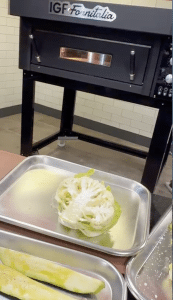
Vegetables like cauliflower, sweet potatoes, courgettes, and broccoli roast beautifully on the stone deck or in shallow trays.

Because the heat is controlled and even, deck ovens are perfect for kitchens that need repeatable results throughout service.

“Courgettes develop light char and concentrated sweetness when roasted in a high-temperature pizza oven.”


BEST VEGETABLES FOR PIZZA TOPPINGS

Roasting vegetables before adding them to pizza changes everything.

Raw vegetables often release water during baking, but pre-roasting intensifies flavour and improves texture while helping pizzas cook more evenly.

Some of the best vegetables to roast for pizza include:

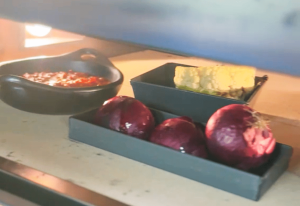
Roasting Vegetables in an IGF Blackline


• Red onions

• Peppers

• Courgettes

• Mushrooms

• Aubergines

• Cherry tomatoes

• Sweetcorn

• Broccoli

• Cauliflower

• Leeks

Pairings work particularly well when roasted vegetables are combined with:

• Fior di latte

• Goat’s cheese

• Ricotta

• Nduja

• Prosciutto

• Fresh herbs

• Hot honey

• Parmesan

Some vegetables respond especially well to the extreme temperatures inside pizza ovens.

Cauliflower develops deep caramelisation and crisp edges while keeping a tender centre. It works brilliantly both as a side dish and as a topping paired with chilli, garlic, or tahini.

Courgettes roast quickly and absorb smoky flavours beautifully, making them ideal for lighter pizzas with lemon, herbs, ricotta, or feta.

“High-temperature roasting creates caramelised edges and rich flavour in cauliflower.”

TIPS FOR ROASTING VEGETABLES IN A PIZZA OVEN

A few simple adjustments can make a huge difference when cooking vegetables in pizza ovens.

• Use less oil than you would in a conventional oven

• Roast vegetables separately before topping pizzas

• Avoid overcrowding trays

• Use residual heat after service for slower roasting

• Rotate vegetables frequently in wood-fired ovens

• Keep softer vegetables away from the hottest flame zones

Trays, shallow pans, and direct stone-deck cooking all work well depending on the style of oven and the result you want to achieve.

MORE THAN JUST A PIZZA OVEN

Modern pizza ovens are capable of far more than baking dough.

Whether it’s the live-fire character of a Zio Ciro wood-fired oven or the precision and consistency of an IGF Blackline deck oven, both styles create opportunities to expand menus, improve prep, and introduce new flavours into pizza making.

And sometimes, the ingredients that make the biggest impact on a pizza aren’t the dough or the cheese, they’re the vegetables roasted perfectly beside the flame.

If you would like advice on how to roast vegetables in your pizza oven or would like to test your recipes in our demo kitchen with specific pizza ovens, please give us a call.

What is Tavern-Style Pizza?

Our guide to what makes an authentic Tavern Style pizza.

When people think of Chicago pizza, they usually picture Chicago-style deep dish pizza, thick crust and layers of cheese. But locals know a different story.  

Tavern-style pizza is the most eaten pizza in Chicago, and it’s been a staple in neighbourhood bars for decades. Known for its thin crust, crispy texture, and square slices, this style is built for sharing and socializing. 


Unlike deep dish, tavern-style pizza is: 

It’s simple, practical, and deeply rooted in Chicago’s food culture.


What Makes Tavern-Style Dough Different?


  1. Low Hydration (Drier Dough)

    ChicagotavernPizza

Tavern-style dough typically has lower water content than most other pizzas. 

Result: 


  1. Fat Is Added (Oil or Shortening)

Unlike traditional Italian doughs, tavern-style often includes: 

Why it matters: 


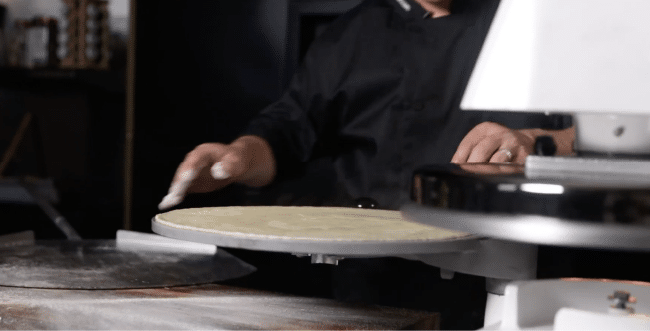
  1. Rolled or Pressed, Not Hand-Stretched

Instead of stretching dough like Neapolitan pizza, tavern-style is: 

Proluxe Dough Press tavern Style

Result: 


  1. Longer, Cooler Fermentation (Optional but Common)

Some tavern doughs are fermented: 

This adds: 

But unlike artisan pizza, fermentation is usually about consistency, not big airy structure. 

  1. Docking the Dough (Super Important)

This is a key step many people miss. 

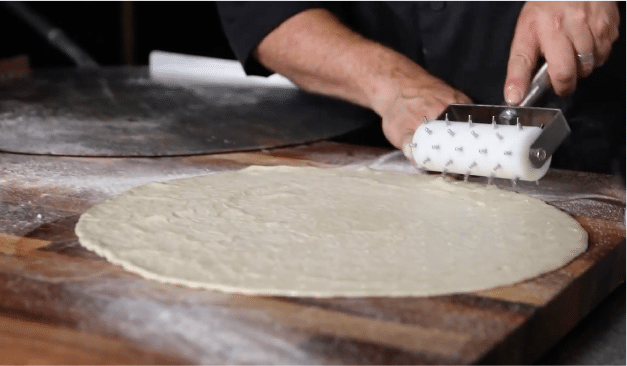
Docking = poking small holes in the dough before baking. 

Dough Docker Tavern Style Pizza

Why: 

This is crucial for that uniform tavern-style base. 


Essential Tavern-Style Pizza Equipment 

  1.  Dough Making 

Optional upgrade: dough divider for consistency 


  1. Dough Forming (Key for Tavern Style)

This is crucial - tavern dough is pressed or rolled, not stretched 


  1. Oven (Most Important Investment)

You need: 


  1. Cutting Tools (Essential for “Party Cut”)

 Tavern-style = square cut, so this matters more than you think 


  1. Baking & Handling


Key Insight 

Tavern-style pizza doesn’t need fancy gear—but it does rely on the right process: 

Thin dough 
Even pressing 
Crisp baking 
Square cutting 

Get that right, and even a simple setup will produce authentic results. 


Pizza Equipment: 2025 reviewed & what 2026 means for Pizza

The UK pizza market continues to evolve, and 2025 proved to be a pivotal year for restaurants and takeaways. 

Rising costs, changing customer expectations, and growing competition have pushed operators to rethink not just their menus, but also their equipment, formats, and production methods. 

The pizza market is still growing 

UK foodservice traffic trends show footfall declines in the first few months of 2025, but this was increasing again by the time we got to the Spring (+ 1.3%). The short decline was most likely driven by inflation and rising food costs, as mirrored by markets in the US. In a recent US market research report, it suggests that the number of pizza restaurants are still increasing in 2025 despite inflationary pressures. 

Quality and craft are driving decisions 

What we are seeing more than ever in 2025 is that consumers are placing renewed emphasis on product quality and consistency, and many operators report that expectations are higher than ever. Pizza that feels handcrafted, indulgent, and distinctive is increasingly preferred. 

This shift has driven demand for improved dough handling and fermentation, more consistent baking results, and equipment that supports premium pizza styles. As a result, many businesses are moving towards specialist tools such as unique pans, dough mixers, dough preparation tools, artisan ovens, and traditional turning peels. 

Pizza Styles are expanding 

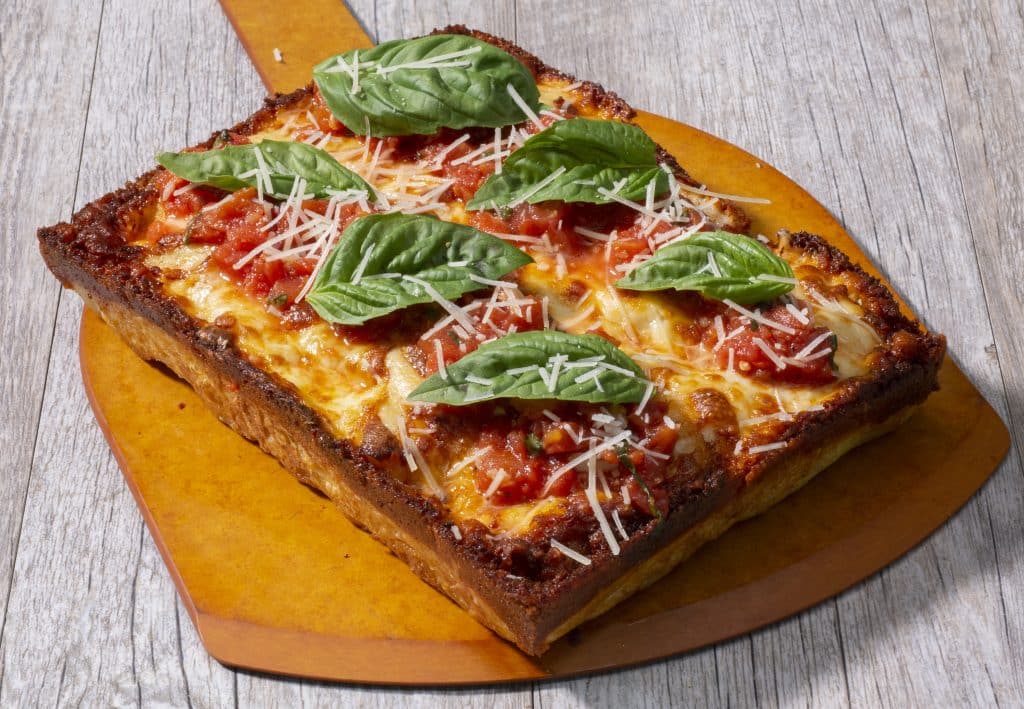
Detroit style pizza has become especially popular. Off the back of this trend, many operators are now exploring other authentic regional styles and how they can replicate them in the coming year.Interest in Italian inspired artisan pizza continues to grow. This not only includes Detroit pizza, but Neapolitan, Roman, and contemporary Italian styles. There is more focus on long fermentation and high hydration doughs, and a focus on simplicity and premium ingredients. 

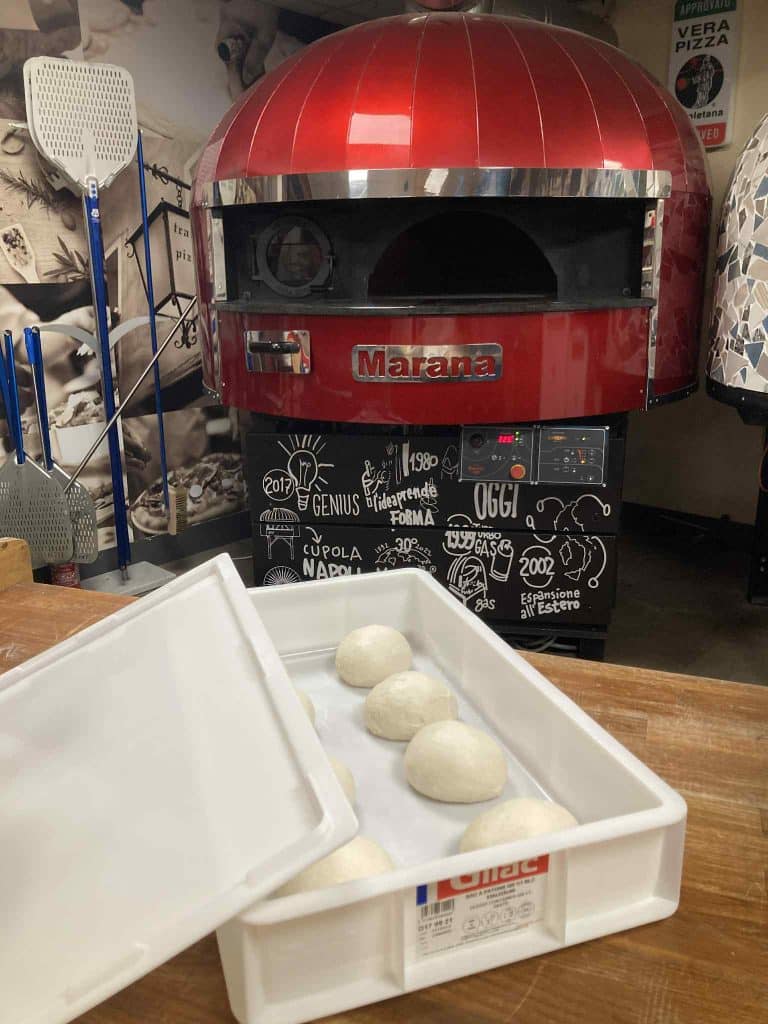
To achieve the performance and authenticity these styles demand, operators are increasingly investing in specialist equipment. There has been a notable increase in demand for wood fired ovens and equipment crafted with Italian heritage or pans used for particular styles of pizza. 

Detroit Pizza

The right equipment gives Competitive Advantage 

For UK pizza restaurants and takeaways, equipment is no longer just a back of house decision. It has become a strategic one. Suppliers have expanded product offerings to support more diverse pizza menus, and more customers are visiting demonstration kitchens to see authentic pizza styles tested in professional ovens. 

During 2025, operators prioritised; versatile ovens capable of handling multiple pizza styles, specialist pans that expand menus without adding labour, and durable professional grade equipment. 

This trend is expected to accelerate in 2026 as businesses look to increase menu flexibility without expanding kitchens, improve speed and consistency during busy delivery periods, and differentiate themselves in crowded local markets. 

pizza peel

What This Means for 2026 

Looking ahead, several themes stand out. Specialist equipment will continue to replace generic solutions. Detroit style and artisan Italian pizzas will remain strong growth drivers. Operators will invest in tools that allow them to do more with existing space and staff, and quality led decisions will outweigh purely cost driven purchases. 

Conclusion 

The UK pizza sector is not standing still. 2025 showed that equipment choices directly influence menu innovation, product quality, and operational efficiency. 

Businesses are encouraged to explore how modern equipment is sourced and tested, visit demonstration kitchens, and review expanded product ranges to understand what is possible in the year ahead. 

At Pizza Equipment & Supplies we have an extensive stock of equipment, plus a demonstration kitchen which has a full spectrum of working ovens and equipment that can be put to the test. We are able to give advice as experienced chefs, and have used the equipment or have background in preparing authentic Italian pizza. Just let us know what you are interested in and we can guide you.

pizza equipment showroom  

The Quiet Power of Blue Handles - Gi Metal

They call it Blue Monday. The day when motivation runs low and the weather drags its feet. A label pinned to the third Monday of January, suggesting the colour blue should be reserved for sighs, slumped shoulders, and inbox overload.

In a pizza kitchen, though, blue tells a very different story.

Rethinking the Colour Blue

Blue doesn’t have to mean gloomy. In fact, in the right hands, blue can mean calm, clarity, and control. It’s the colour of focus before service, of steady hands at a hot oven, of tools you trust when things get busy.

That’s where GI Metal professional accessories quietly flip the script.

If you’ve used them, you already know. Those distinctive blue handles are not a stylistic afterthought. They’re a signal. A reminder that good tools bring confidence, and confidence has a habit of lifting the mood of an entire kitchen. Made in Italy for over 40 years, these are the tools that are chosen by professional pizza chefs all over the world.

Blue That Works Hard

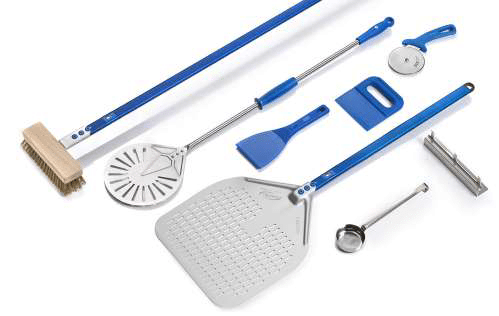
GI Metal’s blue-handled accessories are built for real pizza environments. Peels, brushes, scrapers, turning tools. Designed to be light, balanced, and comfortable, even during long services when precision matters most.

The blue handles stand out visually in a busy workspace, easy to spot, easy to grab, easy to trust. They’re practical, yes, but they also bring a subtle brightness to the bench. A pop of colour that says this kitchen is organised, intentional, and ready.

On a so-called Blue Monday, that matters more than you might think.

Azzura Pizza Peel

Turning Blue into a Positive Ritual

There’s something quietly uplifting about reaching for a tool that feels right. The smooth grip, the balance in motion, the way muscle memory takes over. These are small moments, but they add up. Especially in winter, when routines can feel heavy.

GI Metal accessories turn blue into a working colour. A colour of rhythm. Of flow. Of dough sliding cleanly onto stone and pizzas turning effortlessly at the oven mouth.

Not sad blue. Productive blue.

A Colour that signals Craft

For many pizzaioli, GI Metal tools are part of the visual language of serious pizza making. The blue handle has become a familiar sight in professional kitchens across the world. It signals care for craft, respect for process, and a willingness to invest in tools that support consistency.

That kind of reliability has its own quiet joy. Selection of GiMetal tools

So Here’s to a different kind of Blue Monday

If the calendar insists on calling today Blue Monday, we’re happy to reclaim it. In a pizza kitchen, blue means focus over fuss, confidence over chaos, and tools that help turn a working day into a satisfying one.

With the right accessories in hand, blue isn’t something to shake off. It’s something to lean into.

Because when blue helps you make better pizza, it’s already doing its job.

Explore the range and new features at Pizza Equipment & Supplies! To celebrate the 40th anniversary, the Excellence and High Performance lines have been updated with a new laser marking on the peel heads, and an innovative handle-end for the small peels: a more modern and functional touch to facilitate both the grip and the smooth sliding of the pizza.