🔥 EFFEUNO BLACK FRIDAY – SAVE UP TO 15% + FREE PEEL ON SELECTED OVENS – SHOP NOW →

How many Pizza Peels do you actually need?

Different stages of the pizza-making process call for different tools.

A peel used to launch a delicate, freshly topped pizza is doing a very different job from the small peel used to turn a pizza inside a 450°C oven. And the peel used to retrieve a finished pizza doesn’t necessarily need the same characteristics as the one used for preparation.

Spend any time around a busy pizzeria and you’ll quickly notice something: they rarely use just one peel.

So, how many pizza peels do you actually need?

One pizza, five jobs: which peel does what?

Before deciding how many peels you need, it helps to understand the different jobs they can perform.

1. Prep & launch peel

Build, support and launch the pizza.

This is the peel used to support the dough while you stretch and top your pizza, then transfer it into the oven.

A good launch peel needs to be light, rigid and easy to manoeuvre, with a surface that allows the dough to slide cleanly into the oven.

For many home pizza makers, an all-purpose peel can perform this job perfectly well. But when you’re making pizza regularly, a dedicated launch peel can make the process considerably easier.
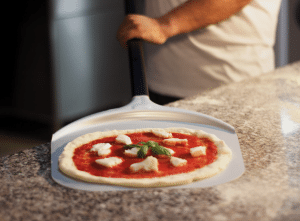
GIMetalNonPerforatedLaunchPeel

 2. Perforated launch peel

Launch the pizza while reducing excess flour going into the oven.

Perforated peels have become increasingly popular because the holes allow excess flour or semolina to fall

That’s particularly useful when cooking at very high temperatures, where loose flour can burn on the oven floor and affect the flavour of the pizza.

The perforations can also help steam escape when handling a cooked pizza, helping to preserve a crisp base.
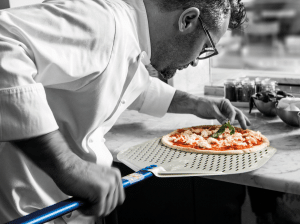
GIMetalPerforatedLaunchPeel

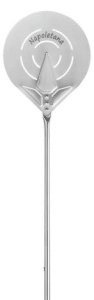
3. Turning peel

To get underneath part of the pizza and rotate it without taking the pizza out of the oven.

That’s particularly useful when cooking Neapolitan-style pizza at very high temperatures, where the pizza may only be in the oven for a minute or so.

Keeping the pizza on the hot cooking surface while turning it also helps maintain the heat of the bake.
4. Retrieval peel

Get the finished pizza safely out of the oven.

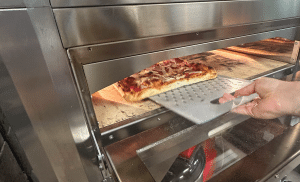
Once the pizza is cooked, you need to get it off the oven floor and onto a board or serving surface.

A thin, appropriately sized metal peel can slide underneath the pizza and lift it without damaging the crust.

For some pizza makers, the same peel used to launch the pizza can also be used for retrieval. For others, keeping the preparation peel separate from the hot retrieval tools makes the workflow easier.
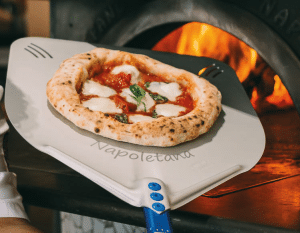
GI Metal Neapolitan Peel

 5. Serving peel

Transfer the finished pizza and serve it.

A serving peel is less about getting the pizza into the oven and more about what happens afterwards.

Depending on the setup, a wooden or presentation-style peel can double as a serving board, allowing the pizza to go directly from oven to table.

This can be particularly useful in restaurants where presentation is part of the experience. 
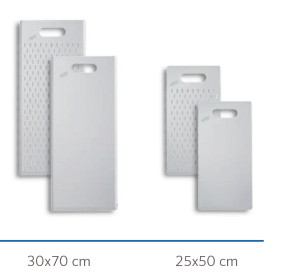
GI Metal Peels used to serve GI Metal Perforated Serving Peel

So, how many pizza peels do you actually need?

For someone making the occasional pizza at home, one good all-purpose peel may be all you need.

A conventional peel can prepare, launch and retrieve a pizza, and can usually manage basic turning too.

But once you start making pizza more frequently, having a second peel makes a noticeable difference.

The professional setup

In a busy pizzeria, the question becomes less about how many peels do I need? and more about workflow

When you’re producing pizza continuously, small improvements in speed, control and consistency can add up.

Different ovens, pizza styles, pizza sizes and production volumes can all influence the ideal peel setup.

A professional pizza maker might therefore have several different peels available, with each one selected for a particular task.

And that’s the important point:

A pizza peel isn’t just an accessory. It’s a piece of production equipment.

The right peel for the right job
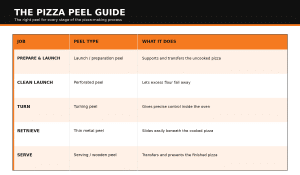
Pizza Peel Type Table


Of course, there can be overlap. A good all-purpose peel may be capable of performing several of these jobs.

But capable of doing a job isn’t necessarily the same as being the best tool for that job.

That’s why experienced pizza makers often end up with more than one peel.

The real question isn’t “How many peels do I need?”

It is....

What jobs am I asking my peel to perform?

If you’re stretching dough, launching pizza, turning pizza, retrieving pizza and serving pizza with the same tool, you’re asking one piece of equipment to do five different jobs.

For occasional pizza making, that’s perfectly reasonable.

For someone making dozens or hundreds of pizzas, separating those jobs can make the process faster, cleaner and more consistent.

The right number isn’t necessarily three, four or five.

It’s enough to give every stage of the pizza-making process the right tool.

 

What Is a Cold Dough Press?

A cold dough press is a machine that shapes pizza dough into a finished base without the use of heat. Unlike traditional hot presses, which can partially alter the dough during processing, a cold press works at ambient temperature, preserving the characteristics developed during fermentation.  

Hand stretching dough is often regarded as an essential part of the craft, helping to preserve the structure, texture and character of the dough. 

The concern has always been that pressing dough could damage the gluten network, remove valuable gas created during fermentation, and ultimately produce a pizza that lacks the qualities customers expect from an artisan product. 

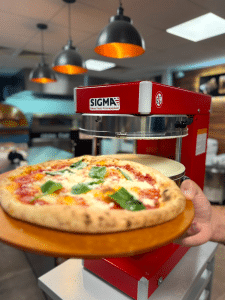
​However, advances in dough pressing technology have challenged these assumptions. Modern cold press systems, particularly the Sigma Sprizza, have been developed specifically to address the needs of artisan pizza makers who want consistency without compromising quality. 

What Characteristics should you look for in a dough presser? 

Whether producing Neapolitan-style, contemporary artisan, Roman, or hybrid pizza styles, most artisan pizza makers are looking to preserve several key characteristics in their dough. 

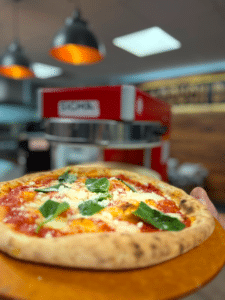
SigmaSprizzaColdDoughPress

Gas Retention 

Long fermentation develops carbon dioxide within the dough structure. These gas pockets contribute to the light, open crumb structure that is highly valued in artisan pizza. 

Aggressive pressing methods can force this gas out of the dough, resulting in a denser finished crust. Traditional pizzerias therefore seek equipment that handles dough gently and maintains as much of the fermentation structure as possible. 

A Defined Cornicione (Edge) 

The raised outer crust, or cornicione, is one of the defining visual features of artisan pizza. A well-developed cornicione provides both texture and appearance, helping create the characteristic oven spring associated with premium pizza. 

Many traditional dough presses flatten the dough uniformly from edge to edge, eliminating this important feature. Look for pressing systems that allow the outer edge to remain intact. 

Preservation of Gluten Structure 

The gluten network developed during mixing and fermentation plays a major role in how a pizza bakes. It affects oven spring, texture, chew and overall eating quality. 

Most pizza makers want dough-handling equipment that stretches rather than crushes the dough, helping maintain the integrity of this structure. 

Consistent Thickness 

Consistency remains important, even in small scale production. Uneven dough thickness can lead to inconsistent baking, with some areas undercooked and others overcooked. 

The challenge is achieving consistency while still retaining a handmade appearance and texture. 

Reduced Stress on the Dough 

Overworking dough during preparation can negatively affect the result. Gentle dough handling helps maintain the characteristics that have been carefully developed through fermentation and proofing. 

The difference between Sigma and traditional dough presses 

Historically, many pizza presses focused primarily on speed and output. While effective for high-volume production, they often produced dough bases that lacked the characteristics artisan operators value. 

Common criticisms included: 

As a result, many pizza makers continued to rely exclusively on hand stretching despite the challenges of maintaining consistency across multiple staff members and busy service periods. 

The Sigma Sprizza Difference 

The Sigma Sprizza was designed with a different philosophy. 

Rather than simply pressing dough between two plates, the machine uses a patented micro-rolling system that reproduces the movements typically associated with manual dough stretching. 

This approach allows the dough to be opened gradually and gently, helping preserve many of the qualities artisan pizza makers work hard to develop during fermentation. 

The process is entirely cold, meaning there is no heat applied during shaping. 

For operators using long-fermented doughs, high-hydration recipes or premium flour blends, this is particularly important because it allows the dough to retain its natural characteristics prior to baking. 

Supporting Artisan Production at Scale 

One of the biggest challenges facing artisan pizza businesses is maintaining consistency as they grow. 

A highly skilled pizzaiolo can hand stretch exceptional dough, but reproducing the same results across multiple locations, shifts and team members can be difficult. 

The Sigma Sprizza offers a solution by providing a repeatable process that still respects the structure of the dough. Operators can achieve consistent sizing and thickness while maintaining the raised edge and fermentation characteristics that define artisan pizza. 

This allows businesses to increase production capacity without abandoning the qualities that made their pizza successful in the first place. 

Sigma Cold Dough Press

Balancing Craft and Consistency 

The debate between hand stretching and dough pressing is often framed as a choice between craftsmanship and efficiency. In reality, modern cold press technology is helping bridge that gap. 

For many operators, the objective is not to replace traditional pizza-making skills but to support them. By handling dough in a way that preserves gas retention, protects gluten structure and maintains a defined crust edge, cold pressing technology can become another tool in the pursuit of consistency and quality. 

The Sigma Sprizza has gained attention for precisely this reason. Rather than forcing artisan pizza makers to compromise on dough quality, it has been designed to work with the characteristics they value most. 

For pizza businesses looking to combine traditional fermentation techniques with modern production methods, cold press technology is becoming an increasingly attractive option, and the Sigma Sprizza is one of the most talked-about examples currently available and in stock on our website. Check out the Sigma Srizza here.  


The Smart Pizza Kitchen

Are Smart Technologies Transforming Commercial Catering (And What It Means for Pizza Production)? 

The commercial kitchen has entered a new era. Where once operators relied solely on heat, skill, and instincts, today’s technology provides real-time data, remote control, recipe precision, analytics, and predictive insights. These built in features are designed to make food production faster, more consistent, and more efficient. 

For pizza operators, from high-volume pizzerias to busy catering kitchens, this smart shift isn’t a trend. It’s becoming a core part of how kitchens stay competitive, reduce risk, and cut costs. 

Let’s explore what the “kitchen of the future” looks like in practice, and how smart equipment, including electric ovens with digital controls, Wi-Fi connectivity, preset recipes, and remote management are shaping the future of pizza production. 


1. Intelligent Ovens with Digital Controls 

Take, for example, advanced electric pizza ovens such as those with preset cooking programs and sophisticated electronic control: 

These kinds of digital control systems can store multiple cooking programs for different styles (e.g., Neapolitan, Pan, Focaccia), making operator training faster and reducing mis-bakes during peak hours. 


2. Cloud & Wi-Fi Connectivity for Remote Control 

Bigger production ovens are also embracing connectivity: 

WiFiControlPizzaOven

This type of connectivity means that kitchen managers don’t have to be physically present in the kitchen to: 

For multi-site operations, this can save time and drastically reduce inconsistencies between locations. 

3. Recipe Standardisation and Remote Management 

Ovens and equipment that allow operators to store multiple timing and temperature settings for different products — Margherita, pepperoni, stuffed crust, gluten-free variations — and execute these with a touch or a remote command are being introduced. That’s a big step toward industrial-level efficiency in food production. 


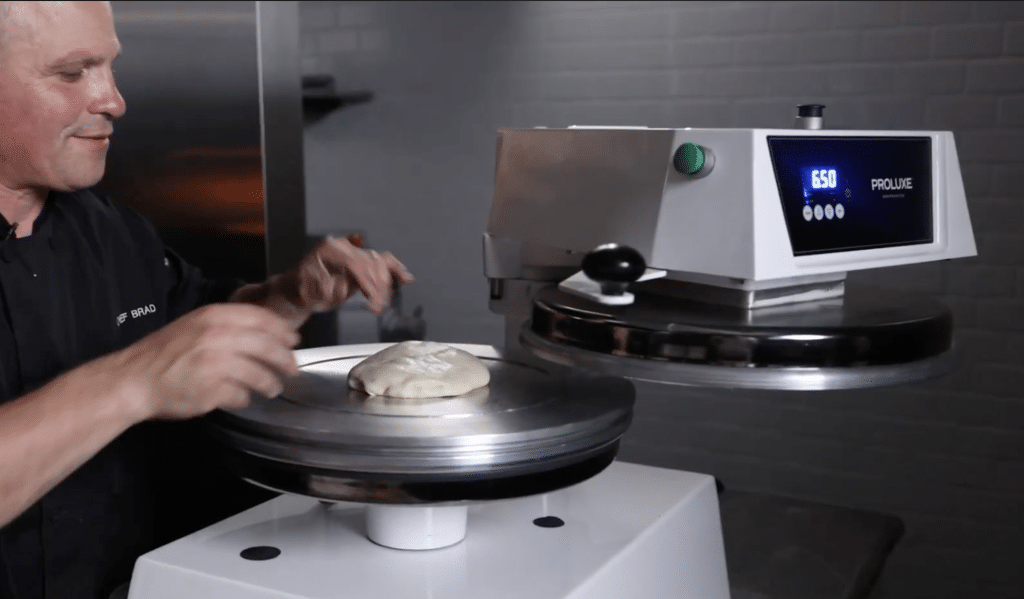
For example, the Proluxe Apex Pro X2M dough press offers a programmable timer, combined with the digital counter, it ensures consistent dough pressing results and prevents overheating. 

ProLuxeDughPressDemo


 4. From Data to Decisions: Monitoring & Predictive Maintenance 

Smart kitchen equipment isn’t just about control, it’s also about visibility into performance over time, which enables proactive maintenance. 

Connected ovens that offer cloud or Wi-Fi features often also provide: 

This helps kitchens to: 

Preventing a breakdown during a Friday dinner rush isn’t just convenient - it preserves revenue and protects your brand reputation. 


 5. Integrating Smart into Your Pizza Production Workflow 

So how does this smarter kitchen tech play into real pizza production? 

✔ Faster Training: With preset cooking programs, even new staff can operate ovens confidently. 

✔ Consistency: Recipes that perform the same way every time reduce customer complaints and food waste. 

✔ Control: Remotely adjust or monitor ovens during peak hours without interrupting kitchen flow. 

✔ Forecasting: Track usage and performance trends to plan part replacements and minimize downtime. 

✔ Efficiency: Save energy when ovens are idle or less loaded, important for both profit and sustainability. 


 Smart Technology is about Empowering staff 

The narrative that AI and smart systems will replace staff is overstated. In today’s kitchens, the real value of smart tech lies in augmenting human expertise: 

What smart technology does is give you: 


 Conclusion: This is the Future of Pizza Production 

For operators and customers of Pizza Equipment and Supplies, the smart kitchen is closer than many think — and you’re already supplying key components of that future. 

From ovens and equipment with digital preset programmes to Wi-Fi-enabled units with remote management, smart tech is transforming commercial pizza production into a process that’s faster and more efficient. 

And because connected tech highlights performance data and patterns, it elevates parts procurement from reactive to strategic. Stocking the right components and understanding how they interact with smart ovens will help your customers avoid downtime and keep production on track. 

The future of pizza production isn’t just hotter ovens - it’s cleverer ones. Give us a call and ask us how smart technology can help your pizzeria.  


The Great Pizza-Cutting Debate

Wheel, Scissors, Rocker, or Equaliser? 

Cutting pizza should be simple, but anyone who’s tried to slice cleanly and evenly knows it can be trickier than it looks.  

Here’s how the four main contenders stack up. 


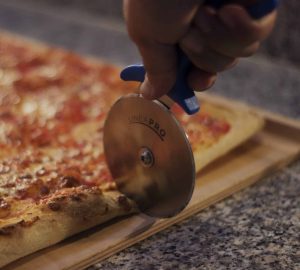
1) Pizza wheel: the classic

Pizza Cutter Standard Wheel

Best for: Everyday use, thin or medium crust pizzas. These can have single or double wheels (one designed to cut and the other it just makes an incision on the pizza slices without separating them completely).  A full range is available from economy to top of the range and with coloured handles for separating foods prepared for allergy or dietary requirements. 

Pros 

Cons 


2) Pizza scissors: the clean cutter 

Pizza Scissors

Best for: Neapolitan-style, thin crusts, or pizzas loaded with toppings. 

Pros 

Cons 


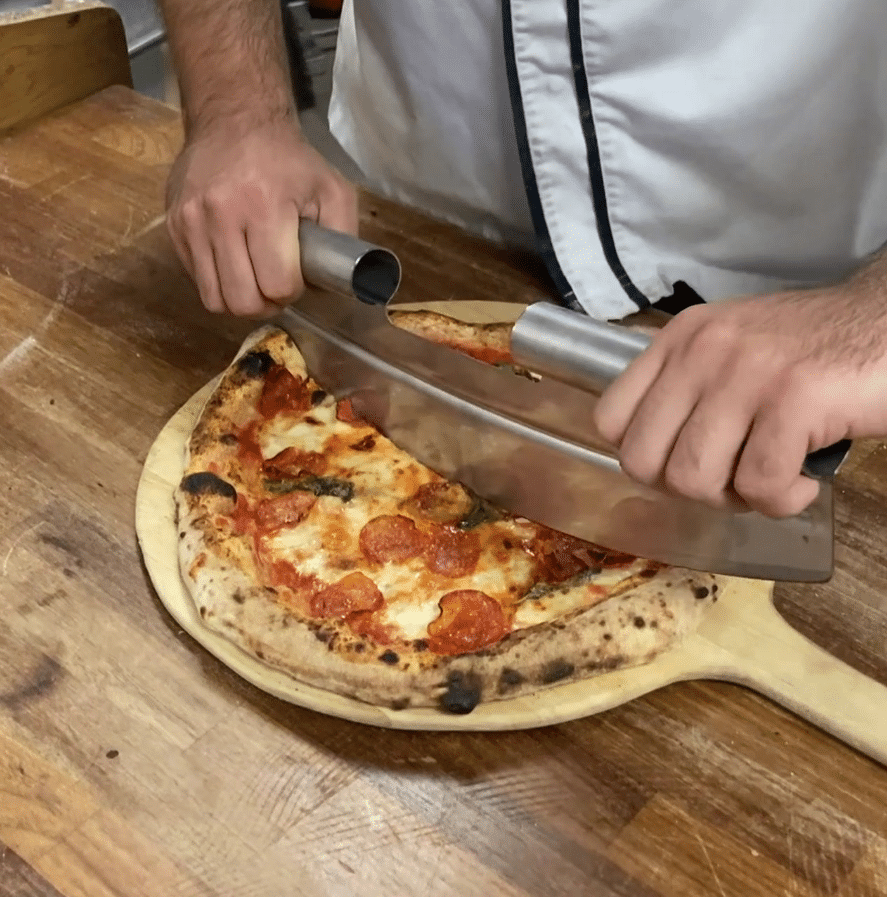
3) Rocker cutter: the pro’s tool 

Best for: Large pizzas and restaurant-style slicing. 

Pros 

Cons 


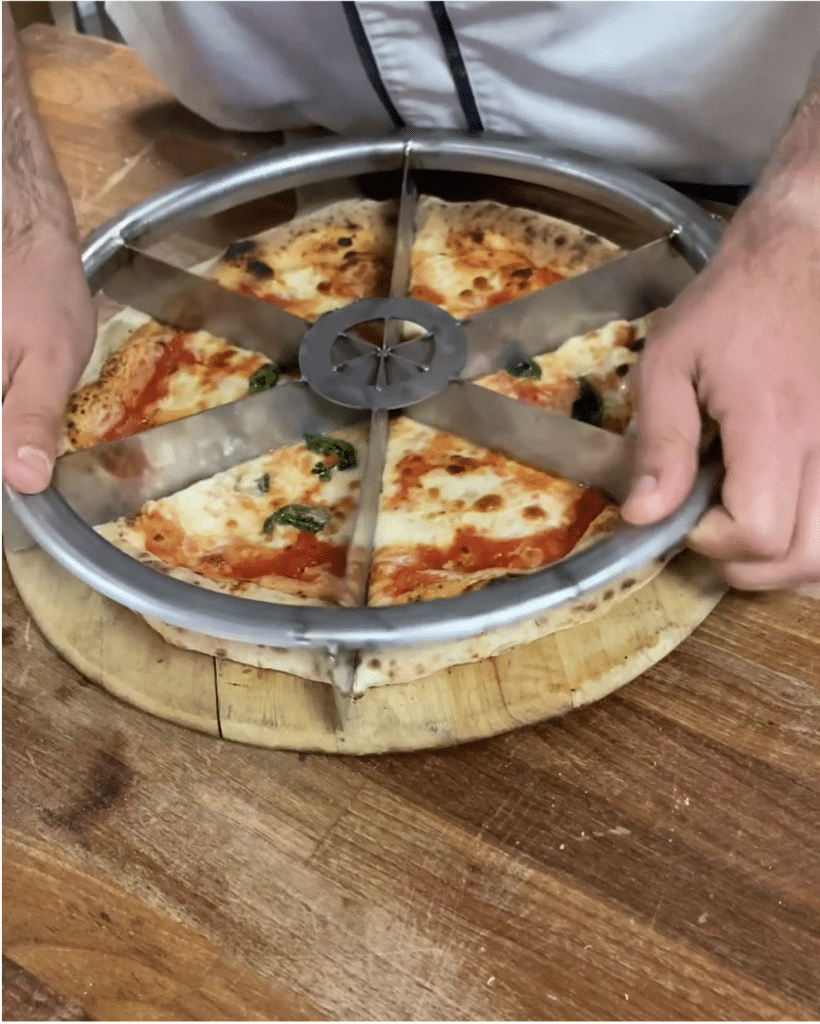
4) Equalizer slicer: for equal portions 

Best for:  For anyone who wants to save time 

Pros 

Cons 


Which one should you choose? 


Final slice (verdict) 

If you’re cutting low volumes, a pizza wheel is still the most practical. But if you’re selling by the slice, the equalizer slicer is unbeatable. For serious home chefs and professionals, adding a rocker or scissors to your toolkit makes service smoother, faster and cleaner. 🍕 


Why Every Pizzaiolo Needs a Professional Chef Set

When you’re serious about making pizza, whether you’re running a pizzeria, a mobile catering setup, or just perfecting your skills at home, the tools you use matter. The Chef Set range is built for professionals who want reliability, performance, and style in their pizza-making gear.

At Pizza Equipment Ltd, we stock a full selection of Chef Set products designed to make your pizza prep and baking smoother, faster, and more consistent.

Why Choose Chef Set?

The Chef Set range focuses on practicality, build quality, and value for money:

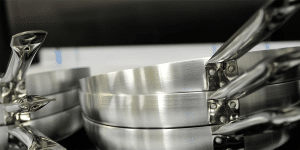
Chef Set Cooking Pan

Popular Chef Set Tools

Peels

Available in both solid and perforated designs, Chef Set peels make launching and retrieving pizzas effortless. Perforations reduce sticking and help shake off excess flour for a perfect base every time.

Turning Peels

Lighter and more manoeuvrable than launching peels, these are ideal for rotating pizzas mid-bake in wood‑fired, gas, or electric ovens.

Oven Brushes

Keep your oven clean and your bases perfect with brass‑bristled brushes that remove debris without damaging the cooking surface.

Scrapers & Accessories

From dough scrapers to handy prep tools, Chef Set covers the smaller details that keep a pizza station running efficiently.

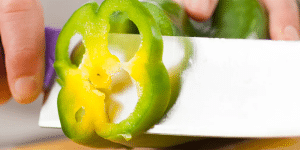
Chef Set Purple Cutting Knife

Sizes & Options

Chef Set tools come in a range of sizes and handle lengths, so whether you’re working in a compact mobile oven or a deep commercial deck oven, there’s a model that fits perfectly.

Who Chef Set Is For

Chef Set Stainless Steel

Final Slice

The Chef Set range offers everything you need to prepare, launch, bake, and serve pizzas like a pro — without overpaying for branding hype. Built for daily use and designed with pizzaiolos in mind, these tools help you work cleaner, faster, and with more precision.

👉 Browse the Chef Set range here