
As temperatures rises, pizza dough can suddenly become difficult to manage, with dough fermenting too quickly, becoming sticky, or losing strength before service.
The good news is that you don't necessarily need a new recipe, you simply need to adapt your dough preparation to suit the warmer conditions.
Yeast activity increases as temperatures climb. Combined with the heat generated during mixing, it's easy for dough to become warmer than intended before it even reaches the fermentation stage.
A dough that's too warm can:
For most pizza styles, consistency starts with controlling the finished dough temperature, not simply the temperature of the ingredients.
Many pizza makers add ice to the mixer to reduce dough temperature, but this doesn't always produce the desired result.
One common problem is sticky dough. This usually isn't caused by the ice itself, but because some of it hasn't completely melted before mixing finishes. The remaining water is released late in the process and doesn't fully incorporate into the dough structure.
Large ice cubes are often the biggest culprit. Their thick shape means they melt slowly, making them unsuitable for shorter mixing times. They can also increase the mechanical load on the mixer as the dough hook works around solid pieces of ice.
For this reason, if you choose to use ice, crushed or chipped ice is a much better option. It melts more quickly, incorporates more evenly and places less stress on the mixing process.
Many experienced pizza chefs prefer using chilled water rather than adding ice directly to the mixer.
Cold water cools the dough immediately while ensuring all the liquid is incorporated evenly throughout the mix. It also allows the mixer to work under normal conditions without the additional resistance caused by solid ice. If extra cooling is needed, stir crushed ice into your water first, allowing part or all of it to melt before adding the water to the flour. This lowers the water temperature without leaving large pieces of ice in the bowl.
The PEB Spiral mixers have a slot on the bowl guard; this allows you to add cold iced water etc. to the dough without stopping the kneading cycle.

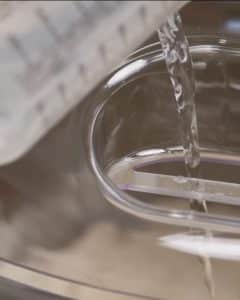
During particularly hot weather, especially when kitchen temperatures exceed 30°C, chilled water alone may not be enough.
In these situations:
This simple pause the ice from melting too late in the mixing process, helping maintain a smooth, consistent dough.
If you hear pieces of ice striking the bowl during the final few minutes of mixing, stop the mixer and allow more time for them to melt before continuing. This not only helps prevent sticky dough but also avoids unnecessary impact on the bowl and dough hook.
Commercial spiral mixers are designed to handle demanding workloads, but good mixing practices help maximise both dough consistency and machine longevity.
Where possible:
These simple habits reduce unnecessary stress on the mixer while producing a more consistent dough.
Rather than guessing, many professional pizzerias calculate the temperature of their mixing water each day.
The flour, room temperature and mixer friction all contribute to the finished dough temperature. By adjusting only the water temperature, you can keep your dough remarkably consistent throughout the year.
If your dough regularly over-proofs in warm weather, resist the temptation to simply shorten the fermentation time.
A better approach is often to reduce the yeast slightly while keeping your usual fermentation schedule. This allows the dough to mature more evenly and maintains flavour development.
Small changes usually have a much bigger impact than dramatic recipe adjustments.
Many professionals use an infrared thermometer or probe thermometer to check the finished dough temperature after mixing.
Recording this figure each day helps identify problems before they affect service.
Consistency is far easier to achieve when you're measuring rather than guessing.
How you stack your dough boxes can make a surprising difference.
Stacking boxes with small gaps between them immediately after balling allows excess heat to escape, slowing fermentation during the first hour or two.
Once the dough has cooled, boxes can be nested or lidded normally before refrigeration. Keep them stacked when you take them out of the fridge to help retain the cooler temperature.
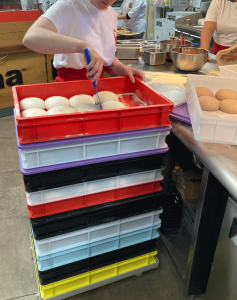
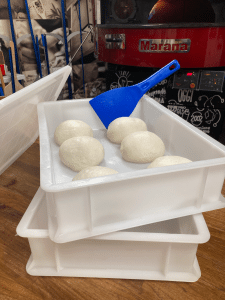
If possible, prepare dough early in the morning before the kitchen heats up.
Even a difference of a few degrees in room temperature can significantly reduce dough temperature after mixing and improve consistency throughout the day.
Warm kitchens can also dry the surface of dough quickly.
Always keep dough balls covered or sealed in dough trays with lids to prevent skinning, which makes stretching more difficult and affects the finished crust.
Hot weather doesn't have to mean inconsistent pizza.
By focusing on finished dough temperature, using properly chilled water, adjusting yeast where necessary and monitoring fermentation more closely, you can keep your dough performing consistently even during the hottest weeks of the year.
In most cases, chilled water is a better solution than adding large amounts of ice directly to the mixer. It gives you greater control over dough temperature, produces more consistent results and helps your mixer operate as intended.
Small adjustments made before mixing are far easier than trying to rescue over-fermented dough later. A little extra attention to temperature and timing will help produce stronger dough, better handling, more consistent pizzas and years of reliable performance from your mixer.
Contact us for pizza making courses or to see some of the equipment in action.