
A cold dough press is a machine that shapes pizza dough into a finished base without the use of heat. Unlike traditional hot presses, which can partially alter the dough during processing, a cold press works at ambient temperature, preserving the characteristics developed during fermentation.
Hand stretching dough is often regarded as an essential part of the craft, helping to preserve the structure, texture and character of the dough.
The concern has always been that pressing dough could damage the gluten network, remove valuable gas created during fermentation, and ultimately produce a pizza that lacks the qualities customers expect from an artisan product.
However, advances in dough pressing technology have challenged these assumptions. Modern cold press systems, particularly the Sigma Sprizza, have been developed specifically to address the needs of artisan pizza makers who want consistency without compromising quality.
Whether producing Neapolitan-style, contemporary artisan, Roman, or hybrid pizza styles, most artisan pizza makers are looking to preserve several key characteristics in their dough.
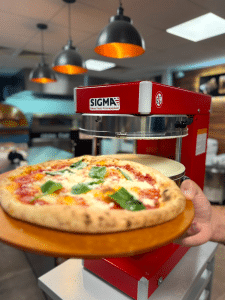
Long fermentation develops carbon dioxide within the dough structure. These gas pockets contribute to the light, open crumb structure that is highly valued in artisan pizza.
Aggressive pressing methods can force this gas out of the dough, resulting in a denser finished crust. Traditional pizzerias therefore seek equipment that handles dough gently and maintains as much of the fermentation structure as possible.
The raised outer crust, or cornicione, is one of the defining visual features of artisan pizza. A well-developed cornicione provides both texture and appearance, helping create the characteristic oven spring associated with premium pizza.
Many traditional dough presses flatten the dough uniformly from edge to edge, eliminating this important feature. Look for pressing systems that allow the outer edge to remain intact.
The gluten network developed during mixing and fermentation plays a major role in how a pizza bakes. It affects oven spring, texture, chew and overall eating quality.
Most pizza makers want dough-handling equipment that stretches rather than crushes the dough, helping maintain the integrity of this structure.
Consistency remains important, even in small scale production. Uneven dough thickness can lead to inconsistent baking, with some areas undercooked and others overcooked.
The challenge is achieving consistency while still retaining a handmade appearance and texture.
Overworking dough during preparation can negatively affect the result. Gentle dough handling helps maintain the characteristics that have been carefully developed through fermentation and proofing.
Historically, many pizza presses focused primarily on speed and output. While effective for high-volume production, they often produced dough bases that lacked the characteristics artisan operators value.
Common criticisms included:
As a result, many pizza makers continued to rely exclusively on hand stretching despite the challenges of maintaining consistency across multiple staff members and busy service periods.
The Sigma Sprizza was designed with a different philosophy.
Rather than simply pressing dough between two plates, the machine uses a patented micro-rolling system that reproduces the movements typically associated with manual dough stretching.
This approach allows the dough to be opened gradually and gently, helping preserve many of the qualities artisan pizza makers work hard to develop during fermentation.
The process is entirely cold, meaning there is no heat applied during shaping.
For operators using long-fermented doughs, high-hydration recipes or premium flour blends, this is particularly important because it allows the dough to retain its natural characteristics prior to baking.
One of the biggest challenges facing artisan pizza businesses is maintaining consistency as they grow.
A highly skilled pizzaiolo can hand stretch exceptional dough, but reproducing the same results across multiple locations, shifts and team members can be difficult.
The Sigma Sprizza offers a solution by providing a repeatable process that still respects the structure of the dough. Operators can achieve consistent sizing and thickness while maintaining the raised edge and fermentation characteristics that define artisan pizza.
This allows businesses to increase production capacity without abandoning the qualities that made their pizza successful in the first place.
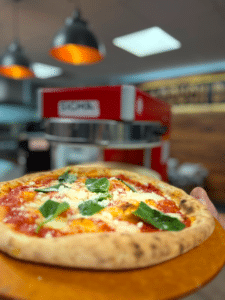
The debate between hand stretching and dough pressing is often framed as a choice between craftsmanship and efficiency. In reality, modern cold press technology is helping bridge that gap.
For many operators, the objective is not to replace traditional pizza-making skills but to support them. By handling dough in a way that preserves gas retention, protects gluten structure and maintains a defined crust edge, cold pressing technology can become another tool in the pursuit of consistency and quality.
The Sigma Sprizza has gained attention for precisely this reason. Rather than forcing artisan pizza makers to compromise on dough quality, it has been designed to work with the characteristics they value most.
For pizza businesses looking to combine traditional fermentation techniques with modern production methods, cold press technology is becoming an increasingly attractive option, and the Sigma Sprizza is one of the most talked-about examples currently available and in stock on our website. Check out the Sigma Srizza here.